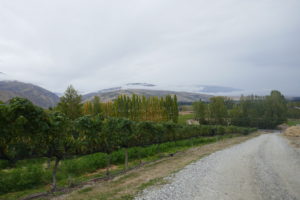
Leaving flat Southland we head inland to Otago. Big cattle farms turn to smaller fruit farms and vineyards. On the roadside chalkboards mention Black Doris, whoever she is. Many ideas are formed until we discover she’s a type of plum. There is a Red Doris too.
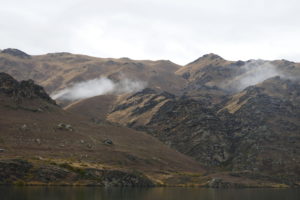
The towns become smaller and finally we climb into hills and mountains. Gold was found near Cromwell in the early 1800s and the rush began. Today a reservoir has flooded much of the old town but a number of buildings are salvaged as a heritage area. It’s not National Trust standard but it works. Across the river are a cluster of vineyards. We plump for a couple and exit suitably refreshed. The views are superb, but we have to plough on.


Arriving in Wanaka, we walk into what looks like a mini Queenstown. An upstairs bar with balcony overlooking the lake is perfect for a G&T sundowner. I’m delighted to see they sell Cornish gin here, too. Taking our host’s recommendation, we eat in a cracking new restaurant off a side street, clearly the place to be in town !
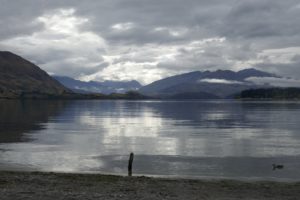
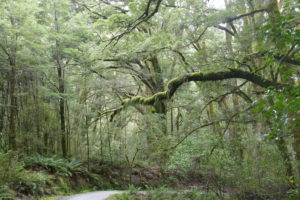
Next day the little car takes us through a gorge, with wide, gravelly rivers, big blue lakes and more of the glacial rock action everywhere. New Zealand is full of bridges and every one is numbered. Most waterways have names and they are amusingly literal: Fish River, Sheepskin Creek (nos 1-12), Swampy Creek, Big Creek, Solitude #6 (really!), Roaring Swine Creek and even Ikea Creek. I guess Ikea is also a Maori word…
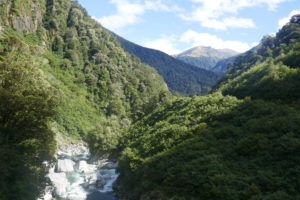
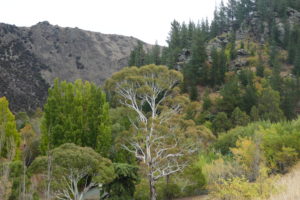
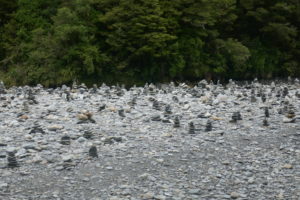
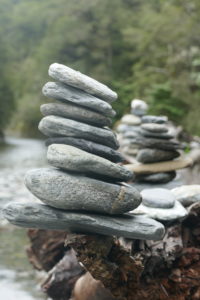
We stop at the Blue Pools, but note they are actually green. No matter, still pretty. Fantail Falls are worth a stop, but not really the main attraction. On the exposed river bed tourists have made stone cairns, hundreds of them. A bit like the padlock craze in Europe, we see them at every watery site. No idea why. Thunder Falls are more dramatic. No pebble towers here.

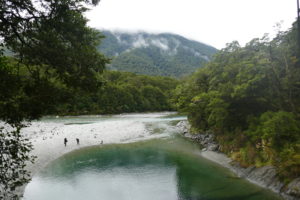

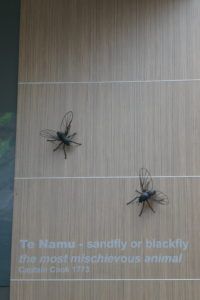
In this part of New Zealand watery places attract tiny, black sandflies. Vicious, annoying little bastards. By the time they land, they’ve taken a bite (sometimes drawing blood) although often you don’t see or feel them. An hour or so later the bite swells and itches constantly, as do the 30 or so others you’ve collected. Sleep is interrupted by the urge to scratch frequently like a mangy dog. We invest in the local repellent at any cost and almost wish for mosquitoes.
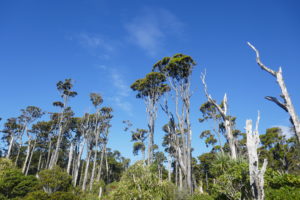
A detour to Jackson Bay is a pleasure. A long, straight cul-de-sac of a road follows the coast west, away from the main highway. Inland a narrow plain full of shapely, windswept trees meet the mountains behind. Stunning scenery. Our drive is beautiful and sunny.

After an hour we reach the tiny natural harbour, with a jetty, a fishing boat and a single yacht, rolling horribly on her mooring. Jackson Bay is a failed settlement. In such a remote place the jetty is essential and it’s delayed construction drove the inhabitants elsewhere before it was finished. Now there are only 3 or 4 small dwellings, the crayfish sheds and an information site. In summer rare Hector’s dolphins and crested penguins visit, glad of the shelter.

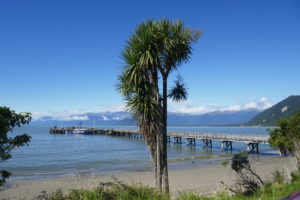
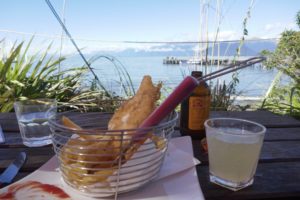
For us it’s the jolly painted caravan – ‘The Cray Pot’ – which is the draw. Super-fresh fish and chips eaten out of a basket overlooking the beach. Just wonderful ! Well, apart from swarms of voracious sandflies feeding on us.

Back on course we drive past Ship Creek and burst out laughing, seeing no sign of a paddle. Time to stop and investigate. It’s a veritable oasis; loads of native plants and flowers, a beautiful, clear stream which winds through the sand dunes to join the sea. A wooden house with many verandahs sits atop the beach behind the trees. There’s a man up on a terrace, staring out to sea. In my head I’m already living in that house.
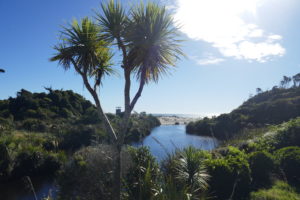
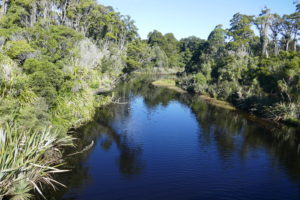
This is a delightful spot and, but for the name, we would have galloped past.