
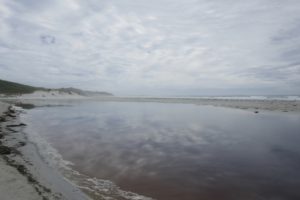
I’m heading to Cape Reinga*, almost the northernmost tip of New Zealand. I’m on an iconic trip in a 4WD bus, through miles and miles of remote countryside. With a significant Maori population, there are few settlements or towns and they are all small. Abandoned houses lie empty, redundant farm machinery lies rusting in fields. There’s plenty of space, so it does not seem to be an issue. Rain threatens, the sky grey. We stop at an old port and a beach with powder fine white, squeaky sand. Both deserted.
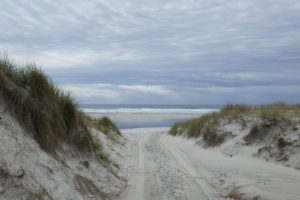
At the southern end of the North Cape farming dominates, with acres and acres of citrus fruits, avocados, corn and vines. As elsewhere in New Zealand, very high hedges protect the more delicate crops from adverse weather. Through gaps in the hedge, the avocado trees are just huge ! Wow.

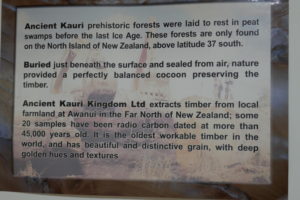
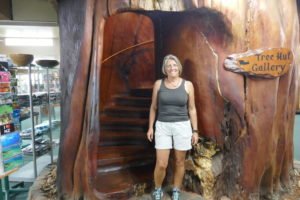
Further north giant Kauri** tree stumps lie in fields, excavated to harvest high quality wood, preserved in the rich soil for years. Like the Huon pines of Tasmania, Kauri trees are long-lived giants, highly prized for their timber and gum resin, but now protected. The only allowable source is from the ground. In a roadside cafe, Kauri products are for sale, but the main attraction is the staircase to the upper floor which is carved from the inside of a Kauri tree. Incredible !!
Cabbage trees grow everywhere, but I know them as ‘Torbay Palms’; the cordyline australis plants which I once sold to tourists in Torquay during my school holidays. We are told early European settlers thought the cooked, young leaves tasted like cabbage, hence the rather odd name. Not sure ‘Cabbage Tree’ has such exotic appeal.

After a picnic lunch at (yet another) lovely beach, we arrive at the cape. This is where 2 oceans meet; the Tasman Sea and the Pacific Ocean and it’s a special place. The colours of the seas are different and the currents and waves constantly fight it out for supremacy off the headland.

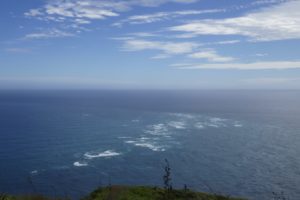
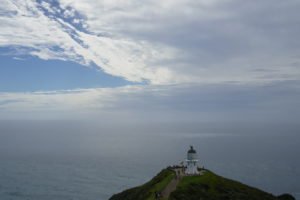
In the sky, the weather is crazy. To our left, it’s blue and almost cloudless, the sun cheerfully beating down in the west. Overhead a striking divide. To the east the sky is grey, full of cloud and dull as far as the eye can see. A two speed sky. And the remains of the next cyclone approaching. But today we are fortunate and bask in the sun. In this sacred place where the Maoris believe that spirits depart the physical world to the underworld, the convergence of water and weather is appropriately symbolic and dramatic.

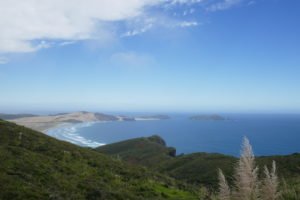

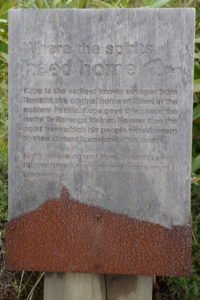
Along the cliff path are snippets of information about the cape and it’s significance to the Maoris, educating us in bite sized chunks.

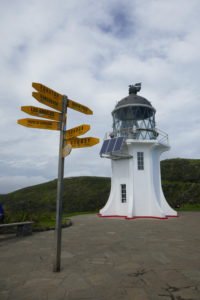
At last I’m at the lighthouse and sure enough, there is a signpost like the one at Stirling Point, 1452km south of here at the end of State Highway1. Of course it’s a selfie opportunity ! However it’s hard to ignore this really is a special place. Pausing to reflect doesn’t seem long enough to pay respect.

Back on the bus it’s a short ride to a dirt track which opens into a shallow river bed. This is the fun part ! Suitably briefed, we scramble up the huge sand dunes lining the river, boogie boards at the ready. At the top we take turns to hurtle down the slope on our boards, ideally avoiding a dunking in the water. The braver folks tackle the higher dunes next, whilst the rest of us watch, praying no-one comes a cropper. A mum of two small girls keeps a brave face as they repeatedly fling themselves head-first downhill, giggling with glee. Oh to be fearless !


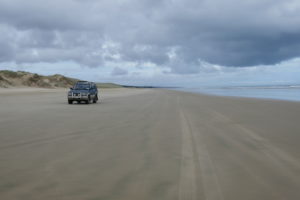
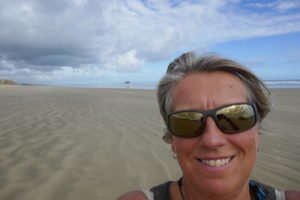
From here, it’s downriver to 90 Mile Beach. Actually a 90km stretch of flat, flat sand stretching the full length of the west side of the peninsula, it’s legally a road and was once an airstrip. We set off along the wet sand, stopping for a bracing wander and to collect a few shells (like I don’t have enough already…).
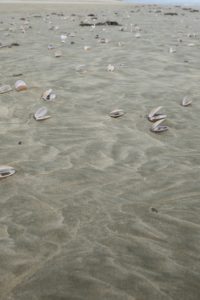

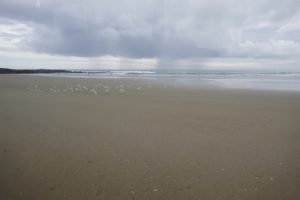
Back in the bus, the driver ploughs on south and I’m pleased to be sitting to the seaward side. 4WDs pass from time to time, seabirds abound and the gathering clouds reflect beautifully in the wet sand and shallow pools.


Green waves crash endlessly on the shore which is great for the fishermen. It’s paradise for the popular big game fishermen in Northland. In a couple of weeks the snapper competition will attract c850 entrants all hoping to land the top prizes of a 4×4 or $10,000 cash. Not bad for a spot of fishing !
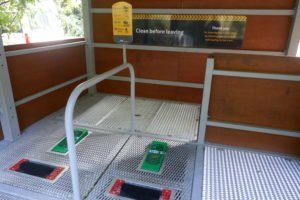
We’ve been blessed again. Arriving back in Kaitaia it’s raining. Next day I head south through the Waipoua Kauri forest where huge, slow growing trees are protected for future generations to enjoy. Kauri dieback is a disease that threatens the remaining stocks and so biosecurity is taken seriously with boot cleaning stations at every access point. Very flash !
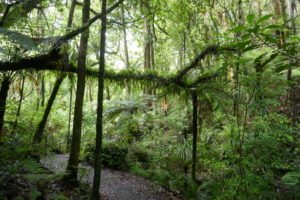
I spend a happy morning walking through the lush forests to locate the biggest specimens on the tourist trail. Kauri are easy to spot. Huge, poker-straight trees tower high up to the canopy where their branches spread off at all angles, unable to keep to the vertical once they are exposed to the weather. As a result they develop large diameter trunks.
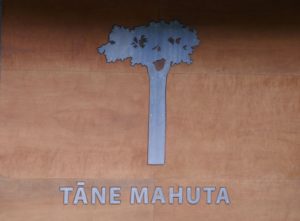
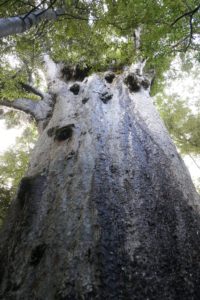
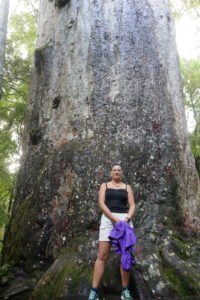
The Maori have given names to a number of the more impressive specimens. One is known grandly as the ‘Lord of the Forest’, but ‘Tane Mahuta’ is the star, believed to be 1,500 years old and still growing. It’s a whopper and dwarfs all around it. You cannot help but be impressed.
* https://en.wikipedia.org/wiki/Cape_Reinga